
Mobile Crane Hire Costs: Why Two Quotes Can Differ
Mobile crane hire costs depend on the equipment, people, time and site arrangements included. Compare the same scope before judging two totals. This guide helps UK hire desks explain the difference.

Compare The Service Behind Mobile Crane Hire Costs
A customer asking why your quote costs more needs a clear explanation of what each offer covers. Start by naming the service and the work included. Avoid offering a discount before checking whether the two prices describe the same job.
HSE's construction guidance for Great Britain explains that planning, supervision and carrying out the lift rest with the crane user unless explicitly assumed by the hire company under a contract lift. It also notes that legal responsibilities are usually shared. A service label alone cannot settle every responsibility.
For a price comparison, list who supplies the planning and lifting team in each offer. Where the customer is arranging something separately, ask them to include that cost in their own project comparison.
Explain Equipment Differences In Ordinary Language
Two offers may describe different equipment because they were prepared from different information. Ask the person reviewing the lift to explain any equipment difference before telling the customer that a smaller crane would be cheaper or suitable.
HSE's lifting-equipment guidance describes machinery whose safe working load varies with operating radius or configuration. A crane's headline capacity is therefore insufficient for comparing suitability. Keep technical selection with the competent person; an office price comparison cannot approve it.
Translate the reviewed requirement into a clear description of what is being supplied. Keep any extra equipment or transport visible, and explain whether it is included in the total or still awaiting a separate price.
Compare The Whole Time And Access Arrangement
Put each offer's time allowance beside the same requested programme. Check what the quoted period covers, including travel, setup and departure where applicable. A short lifting window does not establish the full chargeable period.
Identify site arrangements outside the crane supplier's price. For example, Camden Council's public guidance requires a licence for placing a crane on or oversailing the highway in its area, with Red Routes handled by TfL. That local example is not a UK-wide licensing rule or fee. Check the actual site's responsible authority.
Record who is arranging each outstanding item and whether its cost is included, excluded or unpriced. Keep permission status separate from the commercial total; a priced item does not establish that permission has been granted.
Work Through Two Offers Without Guessing Prices
Illustrative example: a customer compares two offers for placing equipment on a warehouse roof. Offer A states a crane and operator for a defined period. Offer B also lists planning and an additional lifting team. Neither states whether a separately requested access arrangement is included.
Create one comparison row for each part of the requested work. Mark each offer as included, excluded or awaiting clarification. Leave an unknown cost blank and name the question needed to resolve it. Treating that blank as zero would give the customer a misleading total.
In this example, ask whether the customer already has a competent team arranging the work omitted from Offer A. Clarify the access arrangement in both offers. Compare the resulting scope before comparing totals; the initial headline prices cannot tell you which complete arrangement costs less.
- Service, equipment and people: are the offers covering the same reviewed work?
- Time: are the periods and charging bases comparable?
- Outside arrangements: what must the customer organise and price separately?
- Total: are exclusions resolved and both figures on the same VAT basis?
Give The Customer A Specific Next Step
Send a short explanation of the differences you can verify, then ask about the unresolved scope. If the customer changes the service or programme, have the relevant colleague review the requirement and issue a revised offer. Keep its date and assumptions visible.
The useful outcome is a comparison the customer can understand. Keep the question, answer and current offer together so the next colleague can explain the same price without restarting the conversation. Record the reason for each revision so an older total is not mistaken for the current offer.
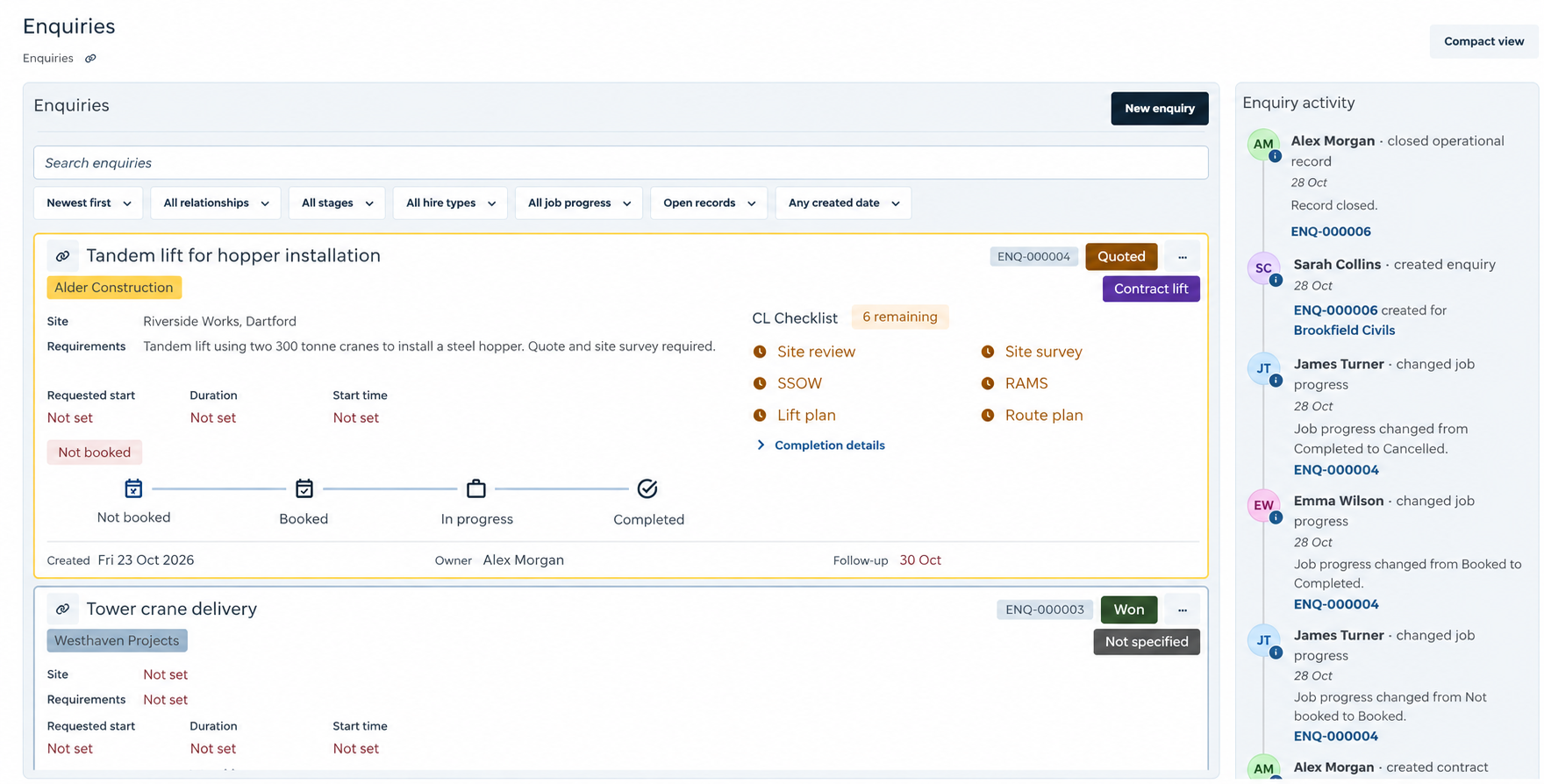
Keep The Enquiry And Reply Together
UpRate Sales Manager CRM is free for one user. Larger teams and optional modules are paid; check the features enabled for your company.
Sign up for FREE Compare modules